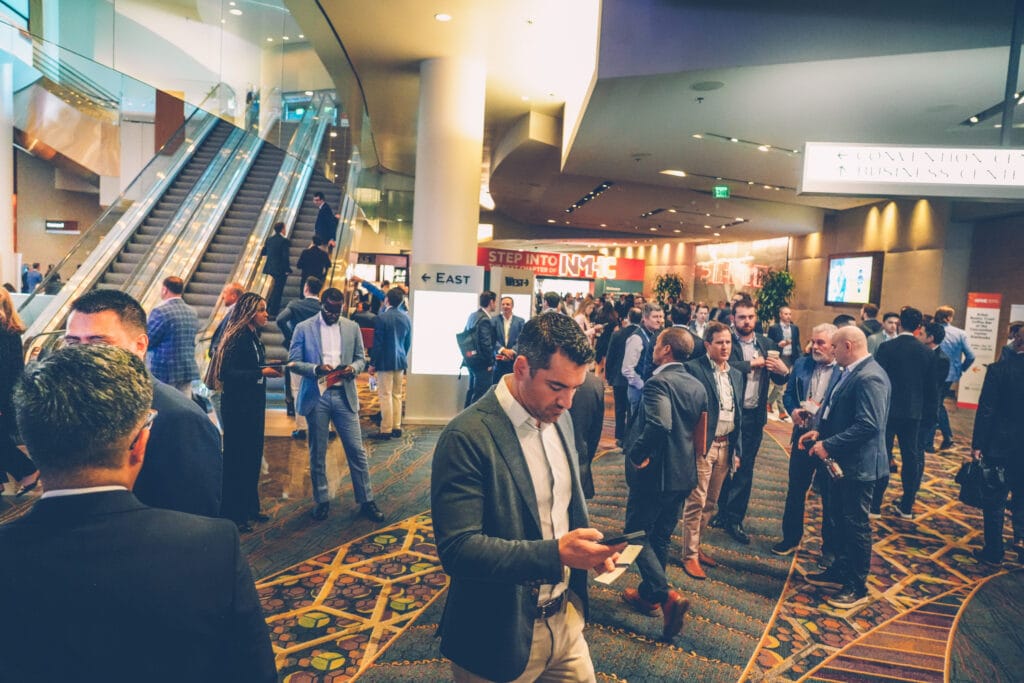
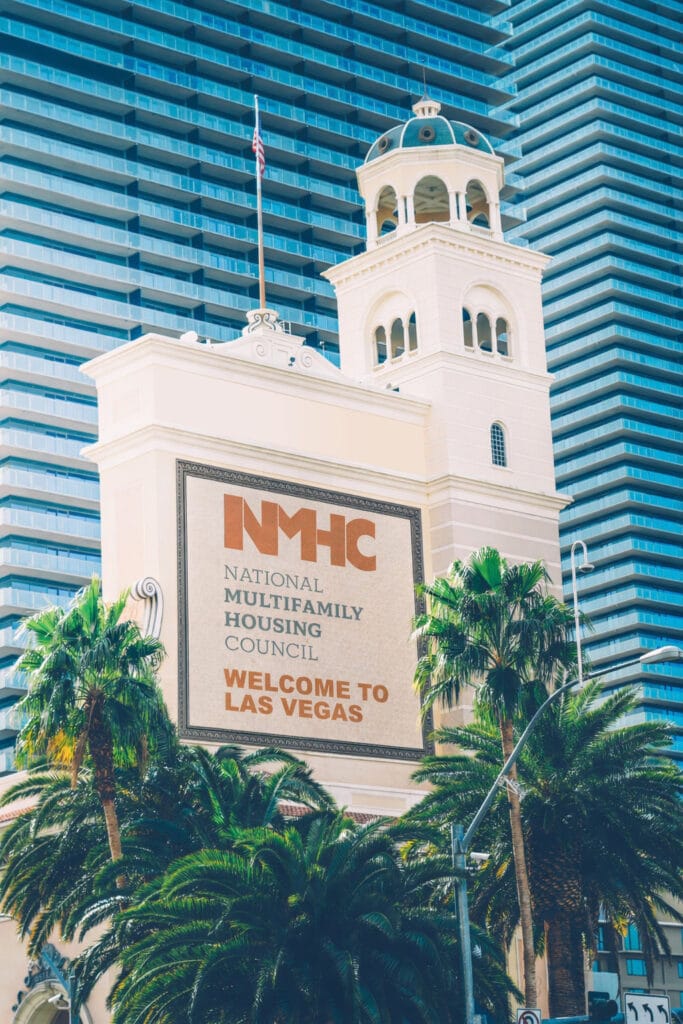
Torque spent three days at NMHC, meeting owners, investors, architects, vendors, brokers and more. We learned a lot, reinforced what we’re doing and met some amazing people. Here is a summary
What the Multifamily Industry Is Really Being Told Right Now
Every NMHC conference has its buzzwords, its shiny booths, its hopeful forecasts, and its polite optimism. But beneath the panels, the pitch decks, and the Vegas spectacle, there’s always a quieter, more revealing story emerging in the hallways, side conversations, and shared frustrations.
This year, that story was clear: multifamily is entering a phase where sameness is no longer survivable.
Rents are harder to push. Capital is more cautious. Lease-ups take longer. Retention is more fragile. And the renter, more informed, more demanding, more emotionally driven than ever, has options. Lots of them.
The takeaway from NMHC wasn’t panic. It was a reckoning.
For years, the industry could lean on a familiar formula: nice finishes, a fitness center, a rooftop, a few lifestyle perks, and steady rent growth. That formula still exists, but it no longer guarantees success.
Today, beige buildings compete on price.
Branded buildings compete on emotion, experience, and relevance.
And that distinction showed up everywhere at NMHC.
When nearly 60% of renters have pets, “pet-friendly” stops being a differentiator and starts being meaningless. What renters are responding to now is how deeply pets are integrated into the culture of a building.
Pet parks alone won’t cut it. The buildings that stand out are branding pet experiences, partnering with local services, hosting events, and leaning into the social side of pet ownership. Pets aren’t just companions, they’re community accelerators.
Ignore that, and you’re ignoring how people actually live.
Free rent has won. Two months is the norm. Gift cards and clever promos barely register anymore.
What does register is what happens after the concession ends.
Buildings that rely solely on discounts are training renters to shop on price and move on. Buildings that invest in experience, service, and emotional connection are building reasons to stay, long after the incentive fades.
Concessions may get someone in the door.
Differentiation is what keeps them there.
Leasing today is less about persuasion and more about response time.
Renters expect immediacy. Delayed replies feel careless. Slow follow-up signals disorganization. And in a world shaped by Amazon, Uber, and instant everything, friction kills momentum.
This isn’t just an operational issue, it’s a branding issue. Which leads to a hard truth echoed repeatedly at NMHC:
Your Tech Is Your Brand
A broken website, clunky leasing flow, or awkward resident app quietly undermines everything else you’ve invested in. It doesn’t matter how beautiful the building is if the digital experience feels dated, confusing, or impersonal.
Conversely, seamless tech builds trust, confidence, and perceived value. It subtly tells renters: this place is run well. And in a competitive market, that perception matters.
AI is everywhere. But renters can smell generic automation instantly.
Over-scripted responses, robotic language, and one-size-fits-all messaging don’t feel efficient, they feel dismissive. The buildings converting best are using technology to support personalization, not replace it.
Efficiency matters. But human tone, specificity, and relevance close deals.
Gen Z isn’t waiting to be entertained, they’re making things. Nearly three-quarters see themselves as creators. That shifts the amenity conversation entirely.
Content studios, creative rooms, learning spaces, podcast booths, flexible maker areas, these aren’t fringe ideas anymore. They’re signals that a building understands how its residents express themselves, build side hustles, and define identity.
Wellness is no longer just physical. It’s creative, social, and mental.
Another quiet but powerful theme: renters want true leisure experiences close by and inside their buildings – spaces that feel social, indulgent, and relaxing without the cost or effort of going out.
It’s hospitality thinking applied to daily life. Spaces that host, activate, surprise, and evolve. Buildings that feel alive after 6 p.m., not just functional.
Yes, job growth and economic uncertainty remain headwinds. But renters are staying on longer. They’re carrying less debt. They’re being more intentional.
That creates pressure, but also opportunity. Markets are shifting unevenly. Class A is still holding. Suburbs are surging. Chicago is rediscovering its momentum. San Francisco is stirring. Seattle remains a long-term favorite.
But across all markets, the common thread is standing out with purpose.
Multifamily doesn’t have a demand problem, it has a distinction problem. In a sea of sameness, the buildings that win will be the ones that stop trying to be everything to everyone and start being something meaningful to someone specific.
That means:
The NMHC takeaway isn’t fear. It’s clarity.